Ads
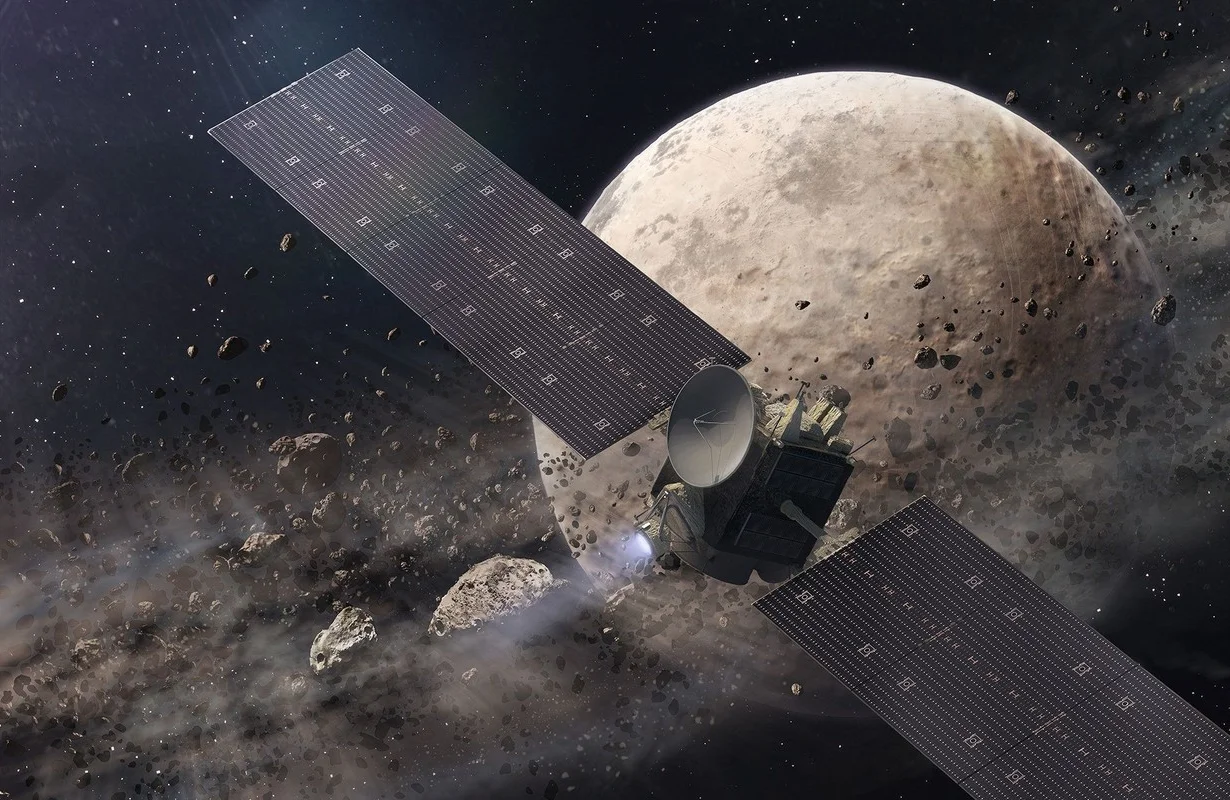
Exploring Ceres: Fascinating Discoveries About the First Asteroid Ever Known to Humanity
khoảng 5 giờ trước
00Description
The journey into our solar system's history often leads us back to Ceres, the very first asteroid ever discovered by human civilization. For centuries, this celestial body has sparked curiosity among astronomers and space enthusiasts alike. Originally spotted in 1801 by Giuseppe Piazzi, Ceres was initially thought to be a planet, then downgraded to an asteroid, and is now officially recognized as a dwarf planet. This transition in classification highlights just how much our understanding of the universe has evolved over the last two hundred years. Located within the vast asteroid belt between Mars and Jupiter, Ceres accounts for nearly one-third of the entire belt's mass, making it a true giant among its rocky neighbors.
Modern exploration, particularly through NASA’s Dawn mission, has revealed surprising secrets about this ancient world. One of the most shocking discoveries was the presence of mysterious bright spots within the Occator crater. These spots, which turned out to be sodium carbonate deposits, suggest that Ceres was once geologically active and may have even harbored a subsurface ocean of salty water. This revelation has profound implications for the search for life elsewhere in the solar system, as it proves that water-rich environments are not exclusive to Earth or the icy moons of the outer planets.
Furthermore, the topography of Ceres is a testament to billions of years of cosmic history. Its surface is peppered with craters of all sizes, yet it also features a lonely, towering mountain known as Ahuna Mons, which scientists believe is a cryovolcano. Instead of molten rock, this volcano likely erupted with a mixture of salt and ice. For those interested in space exploration and the origins of our planetary neighborhood, Ceres remains a primary object of study. It serves as a bridge between the rocky inner planets and the gas giants of the outer solar system. As we continue to analyze the data from deep-space probes, the story of Ceres reminds us that even the oldest known objects in our sky still have plenty of surprises left to share with us. Whether you are a professional astronomer or a casual stargazer, the evolution of our knowledge regarding the first asteroid is a testament to human ingenuity and our endless quest for discovery.
#SpaceExploration, #CeresAsteroid, #AstronomyNews, #DwarfPlanet, #NASA, #SolarSystem, #ScienceFacts
Ads
0 comments
Related Posts
Ads